My Account






News
Mental Health Issues Common In The Athletic World — Even For Sportswriters

Dave Ruden
08.05.2021
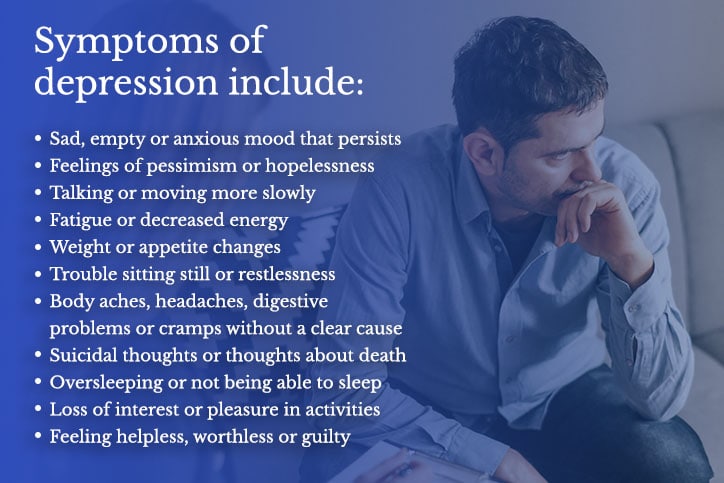
Next week it will be seven years since Robin Williams took his own life. I remember the day not as much for the tragedy but the reaction to it.
How could someone with so much money commit suicide? I don’t understand it, he was always happy and smiling.
The discussion of mental health has again been at the forefront in recent weeks due to the revelations that three top athletes — the tennis star Naomi Osaka, gymnast Simone Biles and, Tuesday, the U.S. 200-meter bronze medalist Noah Lyles — suffer from some combination of anxiety and depression. The pressure of having to perform became too burdensome, to the point that Biles, who became the poster child of the Summer Olympics because of the amazing way she can control her body, lost that authority and feared competing could lead to serious injury.
Fringe conservative writers, exhibiting callous ignorance, criticized Biles for being unpatriotic, a choker, unable to handle the glare of the spotlight. Biles’ resume alone is enough of a stinging rebuke.
Athletes — people — of all ages have long struggled with depression, anxiety and other mental health issues. If these seem like a new phenomenon, they aren’t. Fortunately more people now have a comfort level discussing an illness that is no different from other diseases, only you don’t see tumors, muscle tears or scars. Instead there are chemical imbalances.
High school athletes face burdens like never before. Their schedules were never designed to fit into 24-hour days, their minds and psyches not constructed to always be on call to achieve, both in the classrooms and on the athletic fields. Sometimes that stress is self-induced, sometimes it comes from external forces.
And for young athletes, the burning feel of the spotlight is coming at earlier ages. First come travel teams, then Division I scholarships.
Aren’t sports supposed to be fun, both escapes and outlets?
Over the years a few high school athletes with mental health afflictions have shared their stories after learning that I, too, am a sufferer. I am considered slightly bi-polar. I have issues with anxiety, had one moderate bout of depression and a few minor relapses.
I have had these issues most of my life, I just didn’t know it. They came to the surface around my 40th birthday. I guess it was a different sort of pressure. In the circles I traveled, I usually had the lowest income. I started to feel inadequate, considered myself a failure. I measured myself by my paycheck, not the kind of person I was or the fact that in those same circles I probably derived the most enjoyment from my job.
I was in a funk for a few weeks as my mother tried to get me to seek help. My grandfather suffered from depression, so she was familiar with the signs.
I had always worked my way through problems in the past and I figured this would be no different. Until it became different and I realized I needed to talk to someone to navigate what the singer John Hiatt referred to as The Nagging Dark.
I started to see a doctor but it took about eight months until I emerged from the forest. I was starting to teach a journalism class that I had lobbied for at the former Trinity Catholic High School, where I had been the advisor to the school newspaper. I had to quit after three weeks, consumed by guilt, though the school officials could not have been more understanding.
The same was true of the sports editor at the Stamford Advocate, where I was working. But work was an outlet for me. I was around friends and I was busy. When I wasn’t working I was usually home alone, a prisoner of the negative thoughts bounding inside my head. I had trouble sleeping and lacked both the energy and desire to leave my house.
It was both a miserable yet enlightening period. I learned a lot about myself. I was teased growing up for being a hypochondriac. That was anxiety. Showing up overly early for events? Anxiety, consumed about arriving late. I was being given a road map to my life, a guide how to solve problems, only after the fact.
I slowly started telling friends what I was going through, and the biggest surprise was not the compassion but the number who shared that they, too, struggled with the same problems. Many had also sought help.
I have had periodic relapses but they fortunately have never been as bad as that autumn after turning 40, when on the worst day I ended up crying in my mother’s arms, wondering if I was every going to be happy again.
The biggest step was the first one, admitting I had a problem. Until you do there is an endless cycle of despair. Then the doors to contentment, with the appropriate treatment, whether it be talk therapy, medication or as in my case both, again open up.
On my bad days no one knew unless I shared the state of my mood. There were no signs, like walking with crutches due to injury.
I’ve always felt comfortable discussing my problems because they largely are beyond my control. They are not a personality flaw I can work to correct. They are the neurotransmitters in my head.
I’ve wanted to share my story for some time. I’ve discussed projects with a few athletes similarly afflicted who were at ease sharing their own stories, but they just never came to fruition.
But with mental health issues now topical in sports, this seemed like the right moment. My anger at those who have ignorantly attacked Biles undid my final shackle.
As the battle to bring enlightenment to mental health issues continues, some of the most talented and respected athletes continue to speak out. Biles, the billboard of these Olympics just a few weeks ago, now becomes another important voice to something of far greater import.
I don’t have her reach, but I am lucky enough to have a platform. And if sharing my story and becoming another face in the normalization of an insidious disease provides just one person with the comfort to take that first step, this is well worth it.


Share








support the Ruden Report
Purchasing a subscription or upgrading your current one will help us to continue providing premium coverage.
Upgrade Now